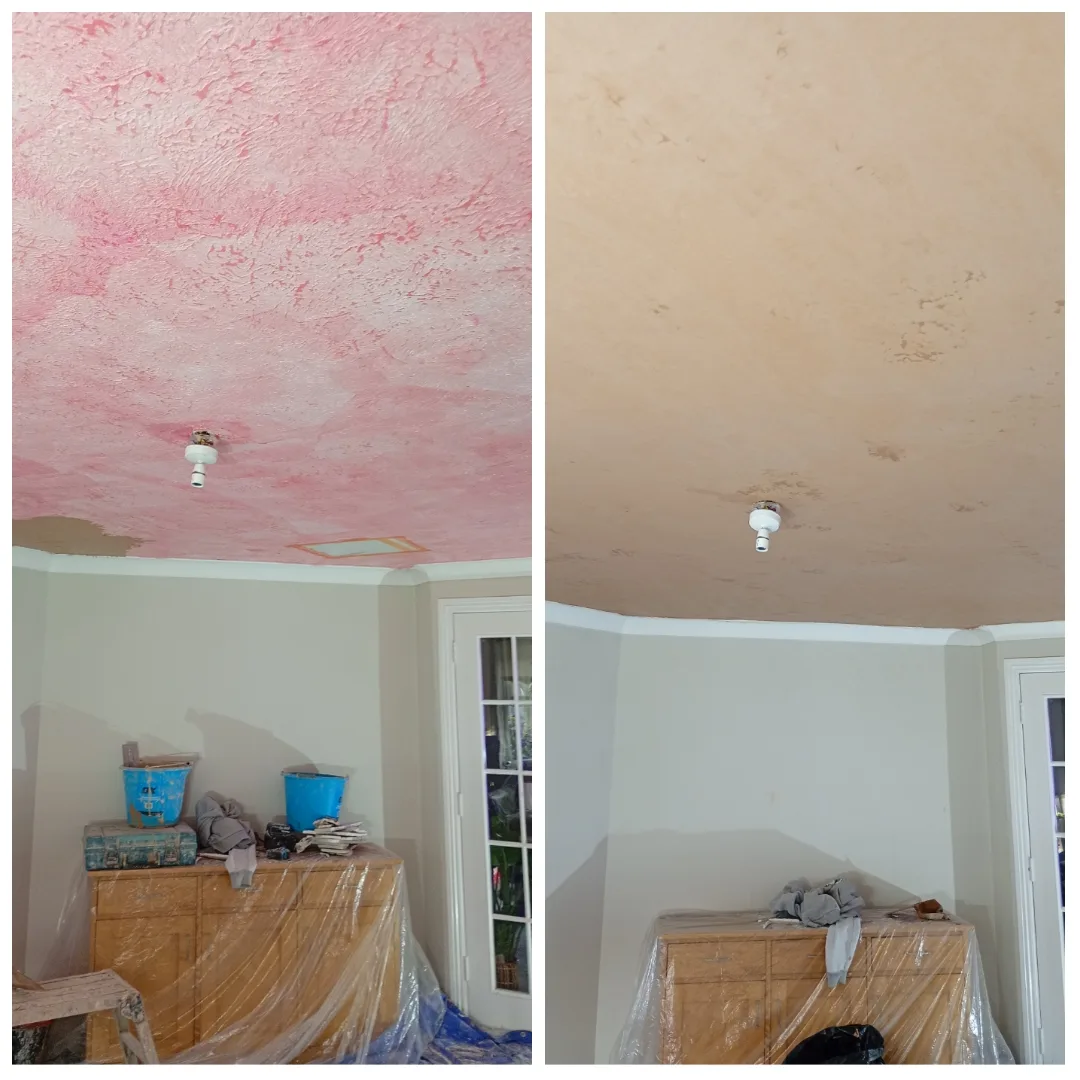
Artex ceilings can almost always be made smooth, either by sealing and skimming over the texture or by over-boarding with fresh plasterboard first. A professional will check the artex's condition and age before choosing the method. The result is a flat, modern ceiling ready for paint, usually within a couple of days per room.
Walk into almost any house in East Kent built or decorated between the 1960s and the early 1990s and there is a fair chance you will find artex somewhere: swirls on the living room ceiling, stipple in the hallway, fan patterns in the bedrooms. It was fashionable once, and to be fair to the decorators of the day, it hid a multitude of sins in old ceilings. But tastes change, and turning textured surfaces smooth is now one of the jobs I get asked about most often across Whitstable, Canterbury and the rest of East Kent. Here is what the work actually involves, and what you should know before anyone touches it.
Why Artex Dates a Room
Artex is a textured decorative coating, and texture is exactly the problem. It catches shadows, so every ceiling light exaggerates the pattern. It collects dust and cobwebs in the peaks, it is awkward to paint well, and it makes even a freshly decorated room feel older than it is. A smooth, flat ceiling does the opposite: it reflects light evenly, takes paint beautifully, and quietly modernises the whole space without you changing anything else.
There is a practical side too. Once artex is skimmed smooth, repainting is quicker and cheaper for the rest of the ceiling's life, and hairline pattern cracks that often show through textured coatings are dealt with at the same time.
The Asbestos Question
This is the part I will not skip over, and neither should any plasterer you speak to. Textured coatings applied before the mid-1980s can contain a small amount of white asbestos. Not all of them do, and asbestos in artex is generally considered low risk while it is left undisturbed and in good condition. The risk comes when it is sanded, scraped or drilled, which releases fibres into the air.
- If your home was built or decorated before 1985: assume the artex could contain asbestos until proven otherwise. A sample test through a UKAS-accredited lab is inexpensive and usually turns around in a few days.
- If the test comes back clear: the ceiling can be prepped and skimmed like any other surface.
- If asbestos is present: that does not mean the ceiling has to be ripped out. Sealing and skimming over it, or over-boarding it, safely encapsulates the coating without disturbing it. What must not happen is dry sanding or scraping.
- If your artex was applied from the late 1980s onwards: it almost certainly contains no asbestos, but if there is any doubt about its age, testing is still the sensible route.
A decent tradesperson will ask about the age of the coating before quoting, and will recommend a test where it is warranted. If someone offers to sand an old artex ceiling back without asking a single question about its age, show them the door.
Seal and Skim vs Over-Boarding
There are two established ways to make an artex ceiling smooth, and the right one depends on the condition of what is up there now.
- Seal and skim: the artex peaks are knocked back gently (never sanded), the whole surface is coated with a bonding agent such as PVA or a purpose-made primer, and then two coats of finishing plaster are trowelled over the top. This is the quicker, cheaper option and works well when the artex is sound, well adhered, and the texture is not too deep.
- Over-board and skim: new plasterboard is fixed straight through the artex into the joists above, then skimmed as if it were a new ceiling. This is the better route when the artex is flaking or poorly bonded, when the pattern is very heavy, when the old ceiling has sagged or cracked, or when asbestos has been confirmed and you want it fully encapsulated behind fresh board.
How do I decide on a survey? I look at how deep the texture is, press and probe to see how well the coating and the ceiling behind it are holding, check for staining or previous repairs, and ask about the age of the property. Deep fan patterns and anything suspect underneath push me towards boarding; a light stipple in good nick is usually a straightforward seal and skim. Either way you end up with the same thing: a flat, modern ceiling ready for paint.
Got an Artex Ceiling You Want Smooth?
Call Tom at TG Specialist Plastering on 07885 477664. Free quotes across Whitstable, Canterbury and East Kent, and honest advice on the right method for your ceiling.
Call for a Free QuoteHow a Pro Preps the Ceiling
Good skimming is mostly good preparation. Rushing this stage is how you end up with plaster peeling off a shiny artex surface a year later. On a typical seal-and-skim job the sequence looks like this.
- Protect the room: floors sheeted, furniture moved or covered, light fittings dropped or masked. Plastering is wet work and a clean site at the end matters.
- Knock back the high points: the sharpest peaks of the pattern are flattened with a scraper so the new plaster does not have to bridge deep valleys. This is done carefully and only on coatings confirmed safe to work.
- Seal the surface: old artex is porous in some spots and painted shiny in others, so the whole ceiling gets a bonding coat to even out suction and give the plaster something to grip.
- Two-coat skim: a first coat fills the pattern, a second coat brings the ceiling flat, then it is trowelled up in stages as it firms to a tight, smooth finish.
On an over-boarding job the prep is different, locating joists, staggering board joints, taping and jointing, but the finishing skim is the same. A single room ceiling is usually done in a day, sometimes with a return visit for the final polish.
Drying Times and the Mist Coat
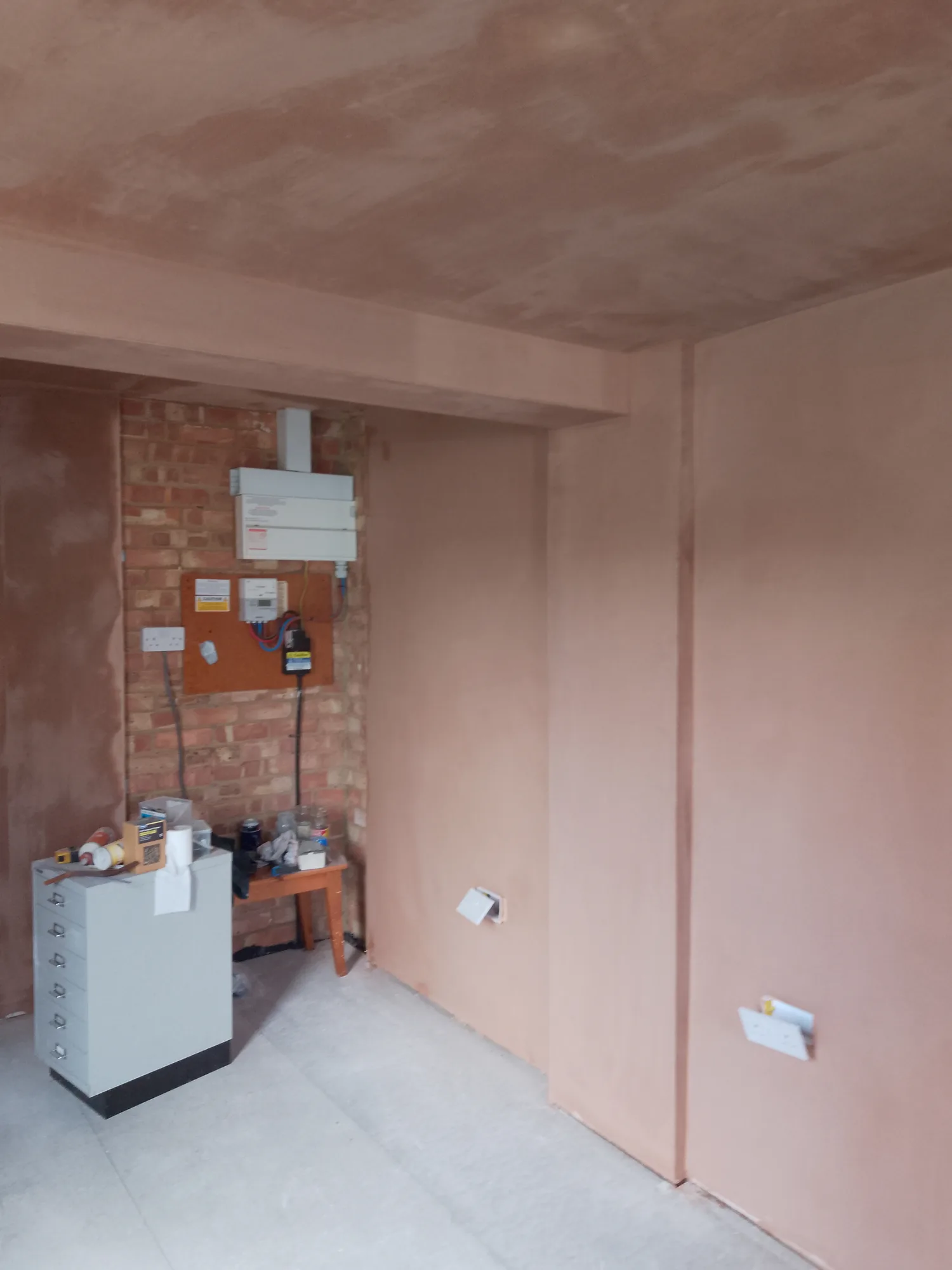
Freshly skimmed plaster goes on dark brown and dries to a pale pink over the following days. How long that takes depends on the weather, ventilation and how much moisture the wall or ceiling behind it is holding, but most skimmed ceilings are ready for paint within about a week. Do not be tempted to force it with blasting heat; steady airflow and patience give the best result.
When it is fully dry, the first coat of paint should be a mist coat: standard emulsion watered down so the thirsty new plaster does not suck the moisture out of the paint and cause it to peel. One mist coat, then two normal coats, and the ceiling is finished. Skip the mist coat and even expensive paint can flake off in sheets, so it is worth doing properly.
What Affects the Cost
I am wary of quoting headline figures because no two ceilings are the same, but these are the things that move the price up or down.
- Room size: the biggest factor by far. A box bedroom ceiling is a different job to an open-plan kitchen diner.
- Method: over-boarding costs more than seal and skim because of the materials and the extra labour of boarding first.
- Condition and depth of the artex: heavy patterns need more filling; flaking coatings need more prep or a switch to boarding.
- Asbestos testing: a small extra cost where the age of the coating makes it sensible.
- Access: high ceilings, stairwells and awkward rooms take longer.
The honest answer is that the price depends on your room, so the best next step is a look at the ceiling itself. Quotes are free, and I will always tell you which method I would use and why, so you can compare like for like.
Frequently Asked Questions
Encapsulating asbestos-containing artex by sealing and skimming over it, or by over-boarding it, is a recognised and widely used approach, because the coating is left undisturbed. What is not safe is sanding, scraping or drilling it. If your artex predates the mid-1980s, get a sample tested first so everyone knows exactly what they are working with.
A typical single room ceiling is a one-day job for seal and skim, with over-boarding sometimes running into a second day. After that the plaster needs around a week to dry fully before it is painted, depending on ventilation and the time of year.
You can, and plenty of people do, but paint does not hide texture, it highlights it. Fresh white emulsion on a swirled ceiling still looks like a swirled ceiling. If the aim is a modern, flat finish, skimming or over-boarding is the only way to genuinely get there.
Hairline surface cracks are dealt with as part of the prep and disappear under the new skim. Larger cracks or movement in the ceiling itself need investigating first; if the old ceiling is failing, over-boarding is usually the better fix because it gives you a sound new surface fixed straight into the joists.